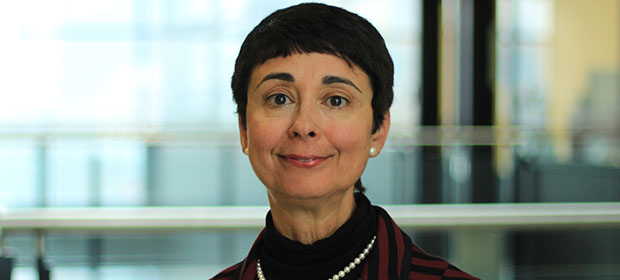
 Reina Bendayan tackles HIV persistence.
By Mark Crawford
Reina Bendayan, Pharm.D., is a professor in the Department of Pharmaceutical Sciences, Leslie Dan Faculty of Pharmacy at the University of Toronto. Her research focuses primarily on membrane transport and therapeutics, with an emphasis on HIV/AIDS antiviral drug transport and regulation in the central nervous system. She has authored nearly 100 peer-reviewed manuscripts and supervised many graduate students and postdoctoral research fellows over her academic career.
Bendayan’s current research investigates the role and regulation of membrane drug transporters and metabolic enzymes at blood tissue barriers of HIV-1 infected individuals, and demonstrates how these transporters can prevent antiretroviral drugs from adequately permeating established sanctuary sites of HIV such as the brain, testicular tissue, and the intestinal tract. Her research has been published in established scientific journals such as Antimicrobial Agents and Chemotherapy, Journal of Antimicrobial Chemotherapy, Molecular Pharmacology, Pharmaceutical Research, Journal of Neurochemistry, Journal of Neuroinflammation, Glia, Advanced Drug Delivery Reviews, Pharmacological Reviews, and Trends in Pharmacological Sciences.
“Our research findings are most relevant to the identification of the causes of HIV persistence,” says Bendayan. “We have observed very low cellular concentrations of anti-HIV drugs in target tissues of HIV-1 infection known to constitute a sanctuary for the infection. These low concentrations can, in part, explain why the virus persists in sanctuary sites protected by blood-tissue barriers such as the brain, the testis, and the gastrointestinal tract, all of which highly express several of the efflux pump transporters known to play a role in the active efflux of several drugs including anti-HIV drugs.”
Although combined antiretroviral therapy does a very good job of controlling HIV infection in patients with virtually undetectable viral loads in peripheral blood, the infection is not completely eliminated from the body because the virus persists in target cell reservoirs and tissue sanctuaries. “We believe that targeting these efflux transporters pharmacologically can lead to improved HIV drug concentrations in these reservoirs and result in eradication of the virus from infected patients,” she adds.
LEADING BY EXAMPLE
Bendayan has served as vice-chair (2012–2013), chair-elect (2013–2014), chair (2014–2015), and currently past chair (2015–2016) of the Pharmacokinetics, Pharmacodynamics, and Drug Metabolism (PPDM) section of the American Association of Pharmaceutical Scientists (AAPS)—a rewarding four years that have greatly enriched her career.
“Becoming part of AAPS was a unique experience for me, since I had never been so highly involved with an international scientific society before,” says Bendayan. “AAPS is one of the largest associations of pharmaceutical scientists in the world; what is especially remarkable is the diversity of its membership and the broad areas of pharmaceutical sciences that it encompasses.”
The success of AAPS as an organization, she notes, is directly related to the tireless efforts of its leaders and dedicated staff. Bendayan worked with a very strong executive team in the PPDM section and benefitted from their strong leadership skills and mentorship. Good leaders, she says, are passionate about their work, have strong vision, and are excellent communicators, being willing to listen objectively to others and respect their opinions. They must also be good role models to trainees, which is more challenging than it sounds—“you have to be a leader at all times, whether you are in the spotlight or not,” she says. “This is especially true for how you go about your work on a daily basis, reacting to situations as they arise or unexpected research challenges as they develop.”
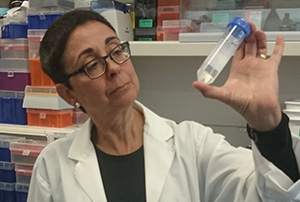 The biggest lesson she has learned in her career, both individually and as a leader of research teams and scientific organizations, is that perseverance and hard work pay off. For example, when Bendayan started her academic career at the University of Montreal as a clinical instructor, she realized that to compete for an academic tenure stream position, she needed more research training. She took a leave of absence and joined the University of Toronto to undertake postdoctoral research work in clinical pharmacology and membrane cell biology.
“This was a very difficult decision because I had just started a very good position at the University of Montreal with the Faculty of Pharmacy,” she states. “There were many adjustments I had to make at the personal and professional level when I left Montreal.”
The perseverance and hard work have paid off.
Her three years of training as a postdoctoral fellow at the University of Toronto were instrumental in advancing her academic research career and provided her with the training she needed to become an independent researcher.
As a result, she now leads a highly rewarding career as an esteemed researcher and full professor at the University of Toronto—the type of job she dreamed of early in her career as a clinical pharmacy instructor. A full professor since 2007, Bendayan especially enjoys the freedom she has in designing and implementing her own research programs.
DEVELOPING A CAREER
For postdoctorate students, what does Bendayan believe it takes to be successful in the pharmaceutical industry or academia?
“Students must have a passion for their work, established competence in a research field that includes a broad background knowledge, strong communication skills, and a willingness to work hard,” she says. “Dedication, commitment, honesty, and flexibility are also attributes that will go a long way in the establishment of a successful career. Most importantly, never give up on the dream!”
For Bendayan, postdoctoral training has been the most enjoyable and gratifying aspect of her career to date—in part because she had two superb mentors, who were very established researchers and leaders in their own fields. “I will say that, for postdocs today, the hardest part is to find jobs,” she says. “It is unfortunate that it is so challenging for postdocs and new graduates to find suitable jobs, either in the industry or academia. My best practical advice for them is to work as hard as possible so that they are comfortable as independent researchers, to have a long-term vision, and to establish strong networking outside the training laboratory.”
And, she notes, there is no better way to network and share your vision than becoming actively involved in professional groups, such as AAPS. “Participation in AAPS is a fantastic way to establish relationships with pharmaceutical scientists working in industry, government, and academia,” says Bendayan. “Postdocs and other professionals can profile their own research work through posters, talks, and workshops, as well as develop new relationships that lead to interesting and exciting research collaborations, or even a new and rewarding career path.”
Mark Crawford is a science and technology freelance writer based in Madison, Wis.